
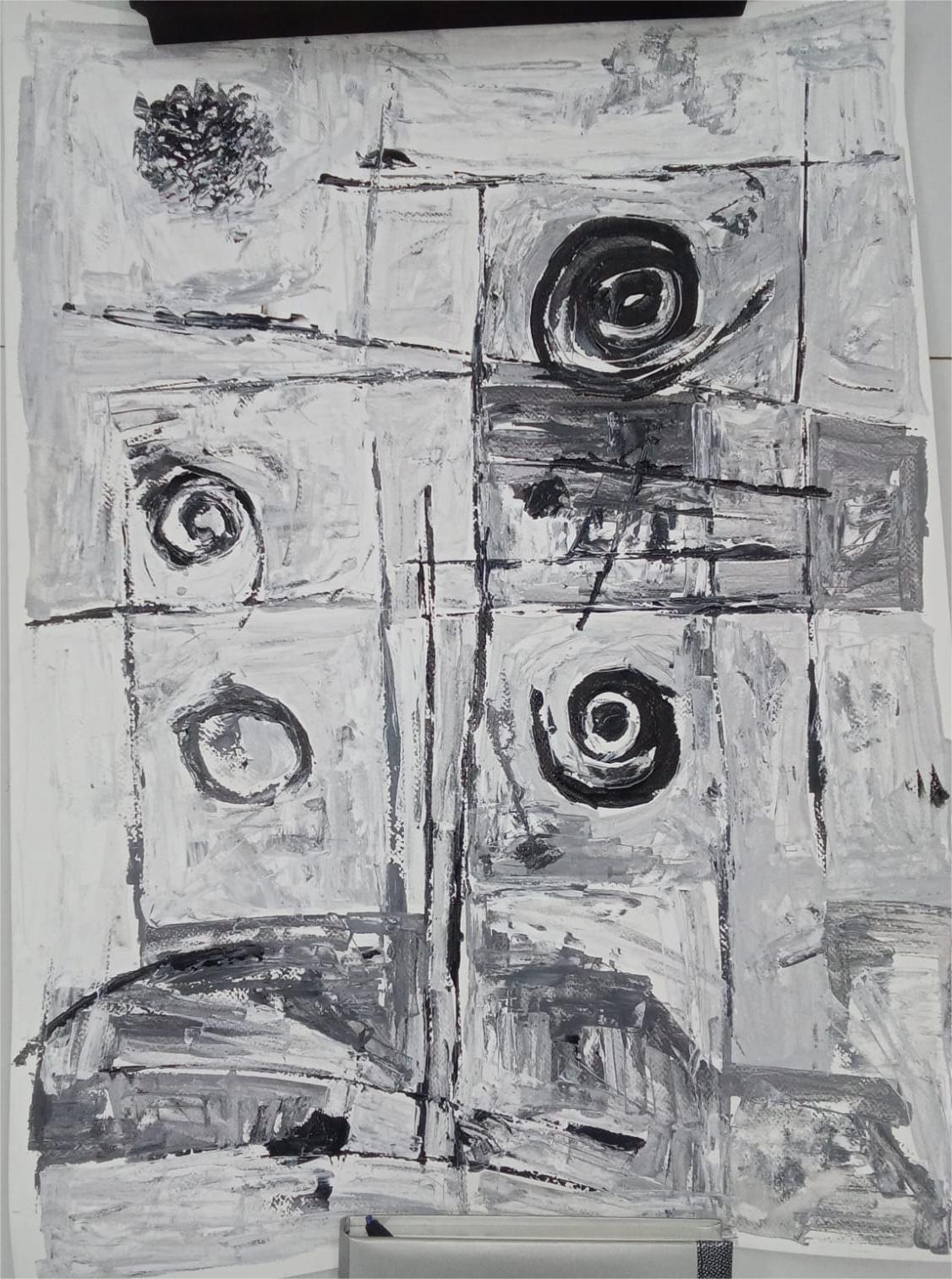
Description
RAM KUMAR
Ram Kumar was born in 1924 in Simla and stands as one of the most important figures of Indian modernism. After studying Economics at St. Stephen’s College, Delhi, he turned decisively toward art and trained in Paris between 1949 and 1952 under André Lhote and Fernand Léger, where he absorbed the formal discipline and philosophical depth of European modernism.
Belonging to India’s pioneering post-colonial generation—alongside artists such as F.N. Souza and S.H. Raza—Ram Kumar sought to merge international modernist language with an evolving Indian consciousness. His work charts a profound inner journey: from the claustrophobic, fragmented architecture of early cityscapes reflecting alienation and existential anxiety, to expansive, meditative landscapes imbued with silence and spiritual introspection. Deeply inspired by the duality of samsara and nirvana, his paintings explore cycles of creation, decay, and transcendence.
Over time, the rigid structures of the city dissolved into luminous visions of river towns such as Varanasi, where the material and metaphysical coexist. Balancing structural rigor with an increasing sensuality of colour and form, Ram Kumar’s later works celebrate nature not merely as landscape, but as a living, breathing presence. His oeuvre remains a powerful meditation on solitude, memory, and the enduring human search for inner harmony, securing his legacy as a towering force in modern Indian art.


Reviews
There are no reviews yet.